
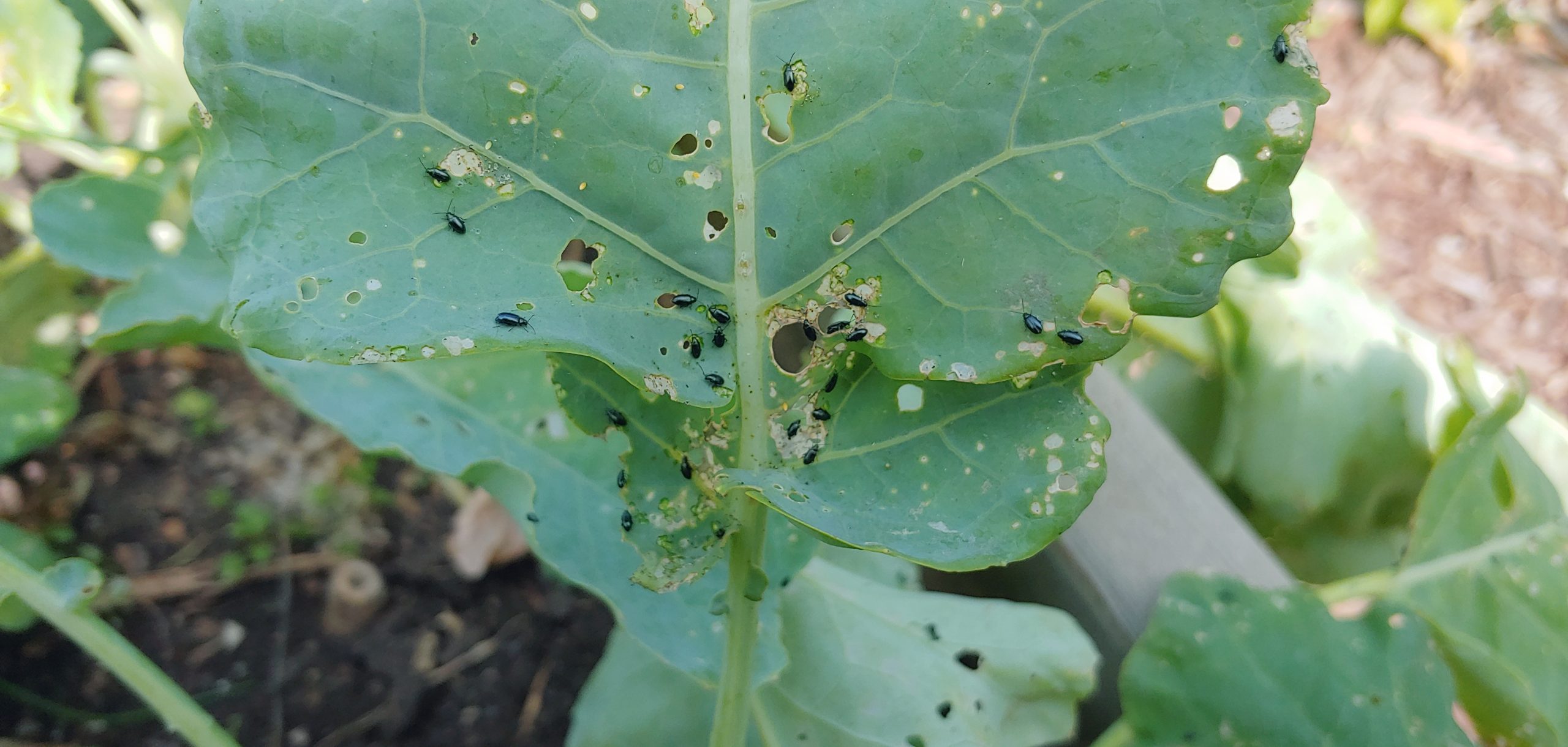
Flea Beetle Infestation: Protect Your Cauliflower
Flea beetles are a type of small, jumping beetle belonging to the family Chrysomelidae. They are named for their ability to jump like fleas when disturbed. These beetles are known for their voracious appetite for various plants, particularly those in the Solanaceae (nightshade) and Brassicaceae (mustard) families. Flea beetles can be both a nuisance and a significant agricultural pest.


Here are some key characteristics and facts about flea beetles:
- Size and Appearance: Flea beetles are typically small, measuring only a few millimeters in length. They have a slender, elongated body shape and often come in metallic colors such as black, bronze, blue, or green. Some species have distinctive patterns or markings on their wings.
- Feeding Habits: Flea beetles are primarily herbivorous and feed on the leaves, stems, and sometimes the flowers of plants. They use their strong jaws to chew small, round holes in the plant tissue, which can lead to significant damage, especially in young or vulnerable plants.
- Host Plants: Different species of flea beetles may have preferences for specific plant families. For example, some are known to attack vegetables like potatoes, tomatoes, eggplants, and peppers (all members of the Solanaceae family), while others may target crops like cabbage, broccoli, and radishes (in the Brassicaceae family).
- Life Cycle: Flea beetles undergo complete metamorphosis, consisting of four life stages: egg, larva, pupa, and adult. The larvae are typically found in the soil and feed on plant roots, while adults feed on the aboveground parts of plants.
- Jumping Ability: The ability to jump is a distinctive feature of flea beetles. They use their powerful hind legs to leap away from threats or to move between plants. This jumping behavior makes them challenging to catch and control.
- Pest Status: Flea beetles can be economically significant pests for farmers and gardeners, as they can cause cosmetic damage and reduce crop yields. To protect plants from flea beetle damage, various control methods, including chemical pesticides, biological controls (e.g., natural predators), and cultural practices (such as crop rotation and row covers), may be employed.
- Diversity: There are numerous species of flea beetles, each adapted to specific ecological niches and host plants. As a result, the exact appearance, behavior, and impact of flea beetles can vary depending on the species and location.


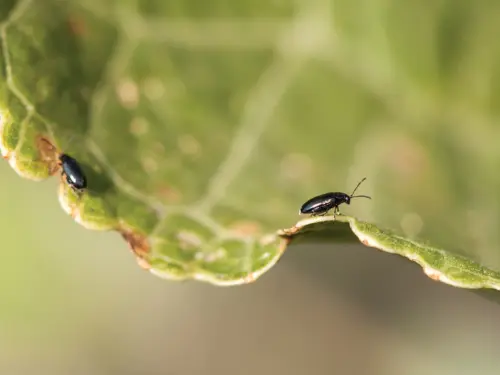
In summary, flea beetles are small, jumping beetles that feed on the leaves and other parts of various plants, posing a potential threat to agricultural crops and ornamental plants. Controlling their populations often requires a combination of strategies tailored to the specific beetle species and the plants they infest.
Leave a Reply
You must be logged in to post a comment.