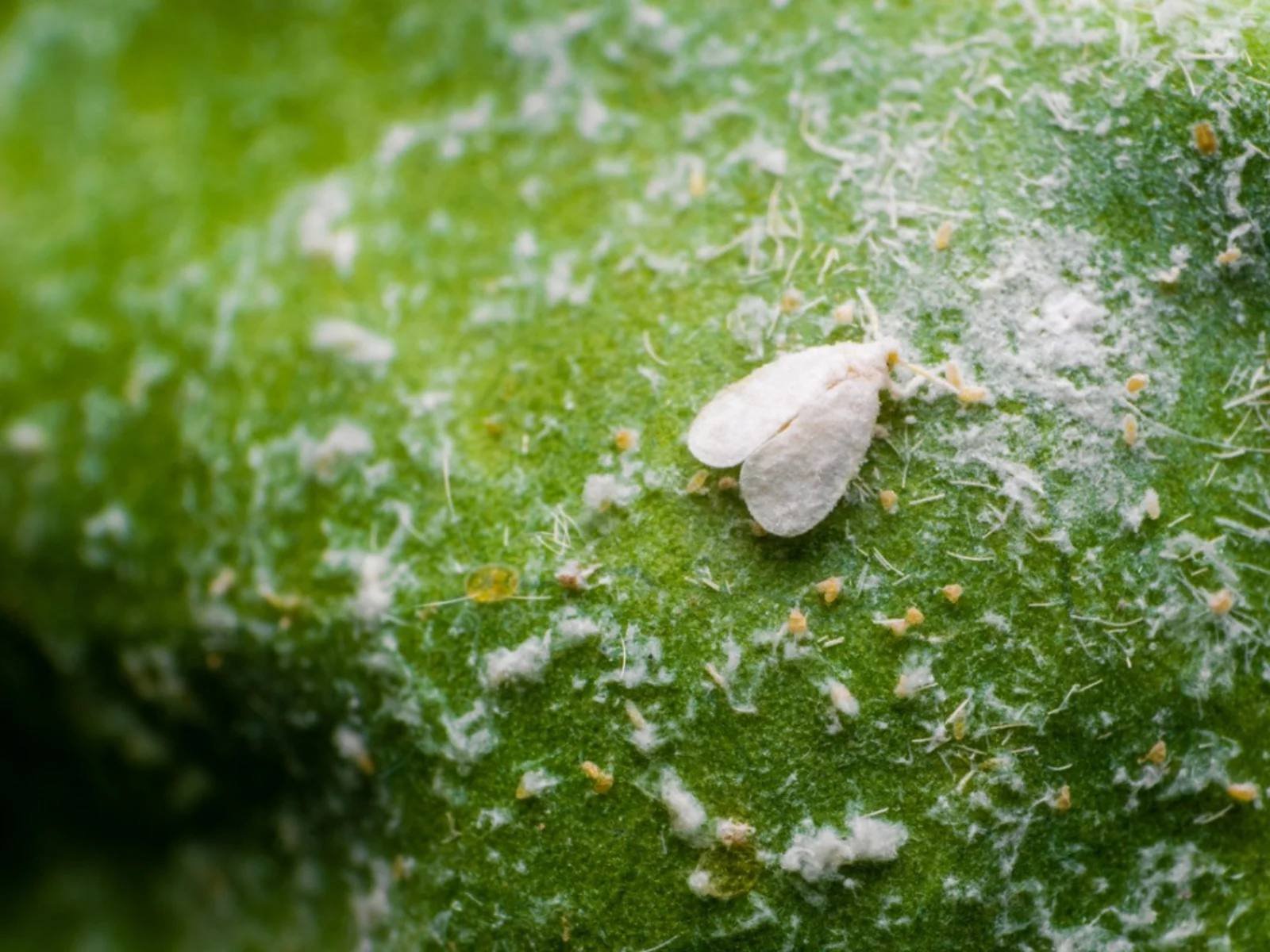
Whiteflies are small, winged insects belonging to the family Aleyrodidae, closely related to aphids and scale insects. These tiny pests typically measure about 1-3 millimeters in size and are characterized by their powdery white appearance, which comes from a waxy substance that coats their bodies.
Whiteflies are significant agricultural pests, particularly for bean plants, as they feed on the sap by piercing plant tissues with their needle-like mouthparts and sucking out the plant’s juices. They primarily infest the undersides of bean leaves, where they lay their eggs. As they feed, whiteflies can cause considerable damage by depleting the nutrients from the plants and weakening their overall health. Additionally, they excrete a sticky substance known as honeydew, which can encourage the growth of sooty mold and attract other pests.
These insects can infest a wide range of plants, including beans, vegetables, fruits, and ornamental plants. Whiteflies can cause direct damage through their feeding and indirectly by transmitting plant viruses. Bean plants, in particular, are susceptible to whitefly infestations, leading to reduced yields and overall plant vitality.
Controlling whitefly populations on bean plants can be challenging due to their rapid reproduction and ability to develop resistance to certain pesticides. Integrated pest management (IPM) strategies, which include cultural practices, biological control (utilizing natural enemies like predators and parasitoids), and targeted pesticide applications, are often employed to manage whitefly infestations and minimize their impact on bean crops.



Leave a Reply
You must be logged in to post a comment.