
Root-Knot Nematodes: Causes, Symptoms, and Solutions
Root-knot nematodes, also known as Meloidogyne spp., are microscopic parasitic worms that belong to the phylum Nematoda. These nematodes are notorious agricultural pests, causing significant damage to a wide range of crops, including vegetables, fruits, ornamental plants, and even some field crops.


Here’s how root-knot nematodes typically affect plants:
- Parasitism: Root-knot nematodes are ectoparasites, which means they live and feed on the outside of plant roots. However, they also create specialized feeding structures called “galls” or “knots” on the roots where they feed and reproduce.
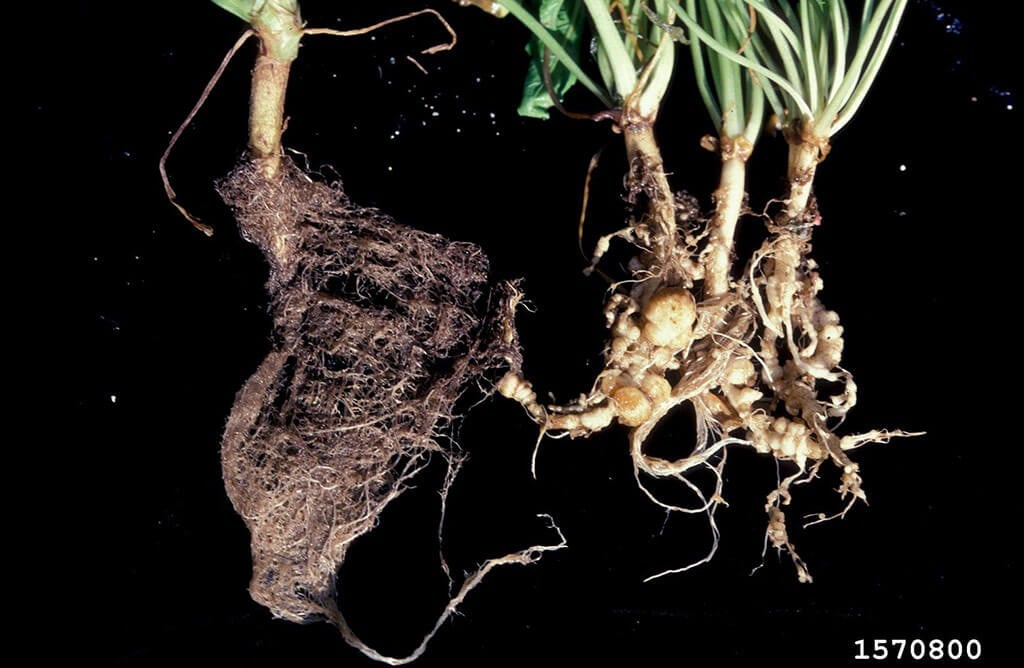
- Symptoms: Infected plants often show symptoms such as stunted growth, wilting, yellowing (chlorosis) of leaves, and a general decline in health. The characteristic symptom is the presence of swollen, knotted, or gall-like structures on the plant roots.
- Damage: The galls formed by the nematodes disrupt the normal functioning of the plant’s root system, reducing its ability to take up water and nutrients from the soil. This can lead to reduced crop yields and sometimes even plant death in severe infestations.
- Life Cycle: Root-knot nematodes have a relatively complex life cycle. They lay eggs inside the root tissue, which hatch into juveniles that continue to feed on the roots. As they grow and develop, they cause the formation of galls. Once they reach maturity, they mate and produce eggs, completing the life cycle.
- Control: Managing root-knot nematode infestations can be challenging. Strategies for control include using resistant plant varieties, rotating crops, practicing good sanitation in the garden or field, and applying nematicides (chemicals designed to kill nematodes). Additionally, beneficial nematodes or fungi that attack nematodes can sometimes be used for biological control.


Root-knot nematodes are a significant concern for farmers and gardeners worldwide, as they can cause substantial economic losses in agriculture. Effective management techniques are essential to minimize their impact on crop production.
Leave a Reply
You must be logged in to post a comment.